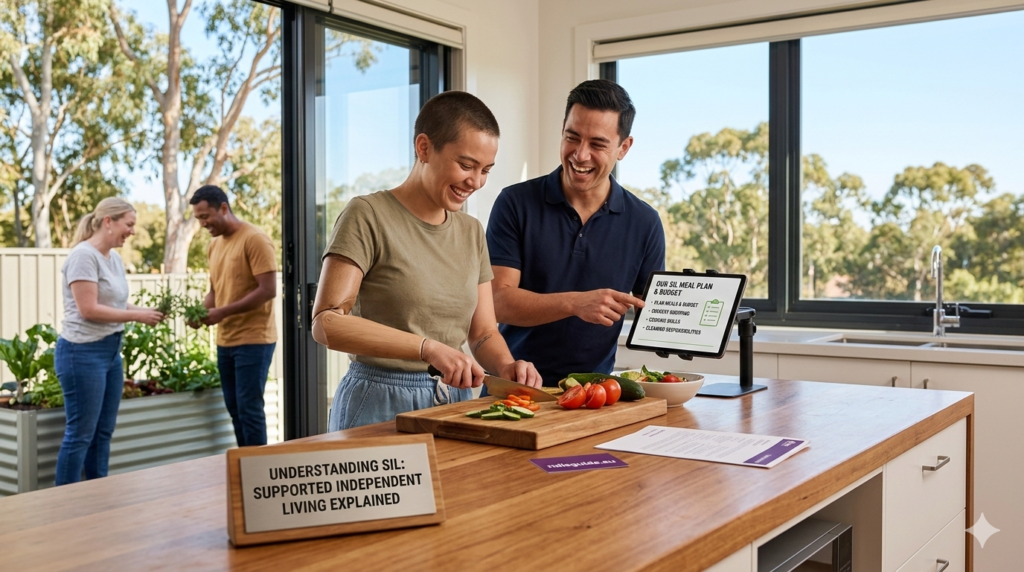
Supported Independent Living (SIL) is one of the most significant and often misunderstood supports available through the NDIS. This guide explains what SIL is, who it’s for, and how to access it.
What Is SIL?
SIL refers to paid supports that help you with daily tasks in a shared or individual living arrangement. It’s designed for NDIS participants who need help with activities like personal care, cooking, medication management, and household tasks — particularly overnight and on weekends.
Who Is SIL For?
SIL is typically for participants with high support needs who require overnight or 24/7 assistance. It’s commonly used by people with intellectual disability, acquired brain injury, or complex physical disabilities.
How Is SIL Funded?
SIL funding sits under Core Supports in your NDIS plan. The NDIA assesses your support needs through a detailed process including an Occupational Therapist assessment and a SIL quote from a registered provider.
Finding a SIL Provider
You can search for registered SIL providers on the NDIS website or through your Support Coordinator. It’s important to visit properties and meet staff before committing to a provider.
SIL vs. Specialist Disability Accommodation (SDA)
SIL and SDA are often confused but are different. SDA funds the physical home itself (the building), while SIL funds the support workers who assist you inside that home. You may be eligible for one, both, or neither.